ServicesIron and sediment filtration
Iron and Sediment Filtration in Bedford, TX
Orange rings in the toilet, sand in the faucet screens, a washer that leaves whites looking dingy. We test your water, find where the iron or grit is coming from, and put the right filter on your main line with the drain and bypass done to code.
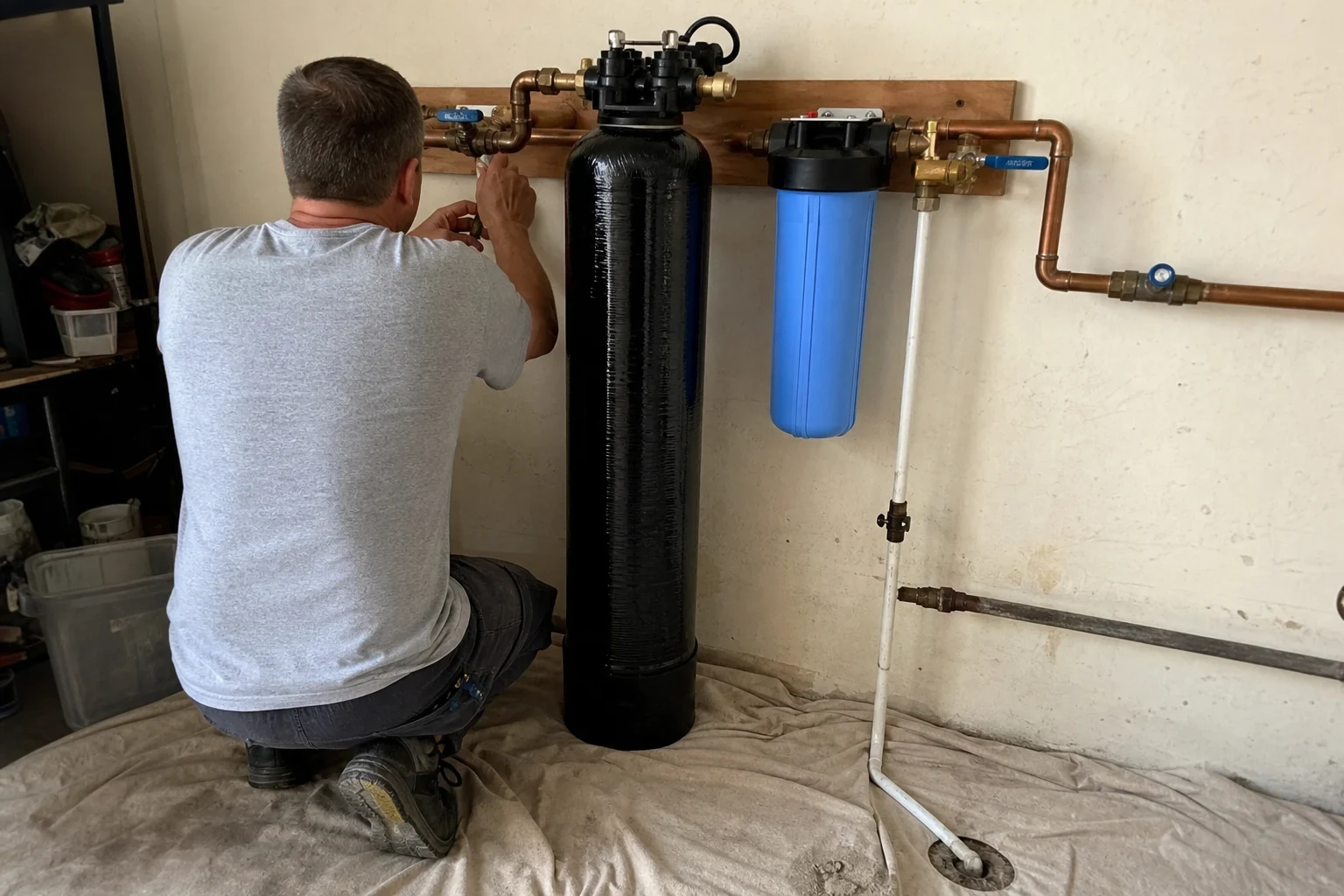
What this filter does and when it makes sense
A sediment filter catches loose particles like sand, scale flakes and rust bits before they reach your fixtures. An iron filter goes after dissolved or fine iron that slips through a plain cartridge. Some homes need one. Some need both, with sediment first so it protects the iron media.
We don't guess. Iron in a home often comes from old pipes or a tired water heater, not the water coming in from the street. A filter at the main can't fix rust that starts inside your own plumbing. So we test at more than one tap and tell you what the numbers show, even when the answer is a repair instead of a filter.
When a filter is the right call, we install it so it passes inspection. That means a bypass valve, a proper drain with an air gap for any backwashing unit, and a check on whether the city wants a permit for the work.
What the job includes
- Water test at the tap
- We check iron, sediment and related readings at the kitchen and at a spigot near the main. Comparing the two tells us if the problem is incoming or inside your pipes.
- Sediment prefilter
- A cartridge housing sized for your flow, usually with a micron rating picked to stop grit without choking water pressure. It goes ahead of everything else.
- Iron filter, if the test calls for it
- For iron a cartridge won't catch, we fit a backwashing media tank. It cleans itself on a timer and sends that rinse water to a drain.
- Code-ready install
- Shutoff and bypass valves so you never lose water during service, a drain line with an air gap so wastewater can't siphon back, and bonding kept intact if your plumbing is metal.
- City sign-off check
- We find out if the city wants a permit and inspection for your job and handle the paperwork when it does. You'll know before work starts.
- Cleanup and walkthrough
- We haul off old parts and packaging, then show you how to bypass the system and when to change the cartridge.
How to tell iron or sediment is in your water
Rust-colored rings
Orange or brown marks in toilets, tubs and sinks that reappear soon after cleaning.
Gritty faucet screens
Aerators and showerheads that fill with sand or flakes every few weeks.
Dingy laundry
White clothes going yellow or tan, most of all after a hot water wash.
Murky water after city work
Water that runs discolored for a while after the city flushes hydrants or fixes a main. A sediment filter keeps that out of your fixtures.
A taste like metal
A penny-like taste that can be stronger in the morning, after water has sat in the pipes overnight.
How the work goes on install day
- 1
Test and plan
We test, explain the results in plain words and give you a written estimate that lists each part. If the city needs to sign off on the work, we say so up front.
- 2
Shut off and protect
We turn off water at the main, lay down floor covers and set up where the line enters your home, often the garage or an outside wall.
- 3
Cut in and connect
The housing or tank goes in with shutoffs and a bypass. Backwashing units get a drain line with a proper air gap and a dedicated outlet if they need power.
- 4
Flush and check
We flush the new media, look for leaks, check pressure at a far tap and run a backwash cycle so you can see it work.
- 5
Inspection and handoff
If the job needs a city inspection, we schedule it. Then we walk you through filter changes and leave the area clean.
What moves the price
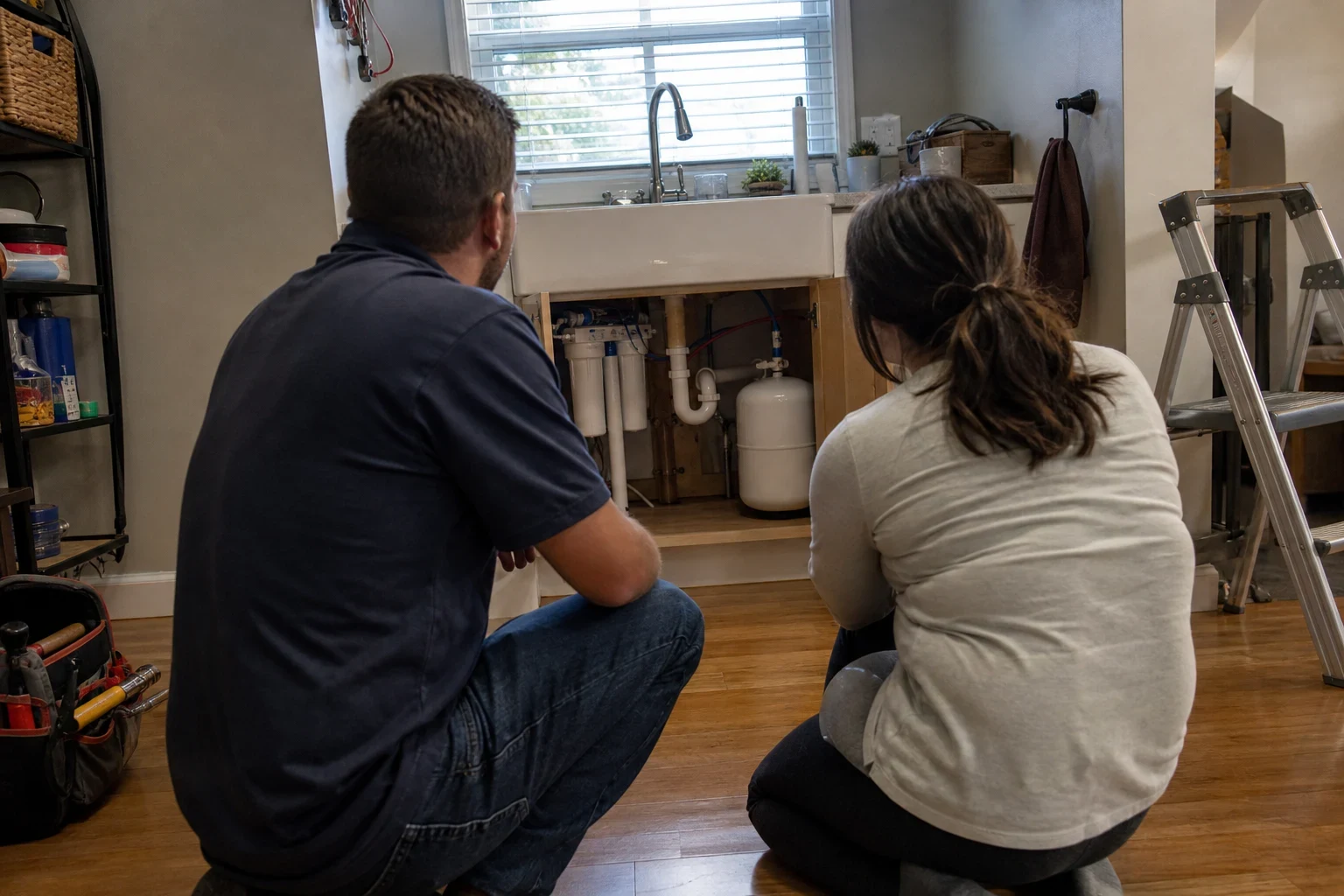
A simple sediment cartridge on an easy-to-reach line is the smaller job. A backwashing iron tank with a new drain and outlet is the bigger one. We price from your test results and your home, and you see every line before we start.
- What the test finds
- Grit alone can be handled with a cartridge. Higher iron levels need a media tank, and that changes the parts list.
- Where your main line is
- An open garage wall is straightforward. A line behind finished drywall or in a tight closet takes more labor.
- Drain and power
- Backwashing tanks need a code-compliant drain nearby. If there isn't one, adding it is part of the cost.
- City fees and inspection
- When the city requires a permit, its fee and the inspection visit are listed on your estimate, not added later.
Common questions about iron and sediment filters
Something not covered here? (817) 632-5451
Can a whole-house filter stop rust from old pipes?
Sometimes not. A filter on the main only treats water at the point it comes in. If galvanized pipe or the water heater is the source, the water picks up iron after it leaves the filter. Testing at two spots shows us which situation you're in.
Is a permit needed for this work in Bedford?
That depends on what the job involves. Cutting into the main line and adding a drain may require a permit and inspection. We ask the city before we start and handle it when it applies, so the work won't cause trouble at a future home inspection.
Does a filter reduce water pressure?
It can if it's undersized or rated too fine. We match the housing and media to your home's flow so any drop stays small. A cartridge that's clogged will also lower pressure, which tells you it's due for a change.
How often is service needed?
Sediment cartridges are typically changed a few times a year, and sooner after work on the city lines. Iron media holds up much longer but does wear out eventually. Our filter replacement and maintenance service handles both.
Do I also need a softener or a carbon filter?
Only when your water needs it. A softener is worth it once a hardness test supports one. For a chlorine taste, whole-house carbon filtration is the better fit, and it performs best with a sediment filter installed in front of it.
Find out where the grit is coming from
We'll test your water, show you the results and tell you if a filter will actually help. If it will, we install it to code and handle the city paperwork when it's needed.