ServicesWater testing
Water Testing in Bedford
We test the water at your tap and tell you what's actually in it. Then we tell you what, if anything, is worth fixing. Many homes need one small filter or nothing at all. Testing first keeps you from paying for equipment you don't need.
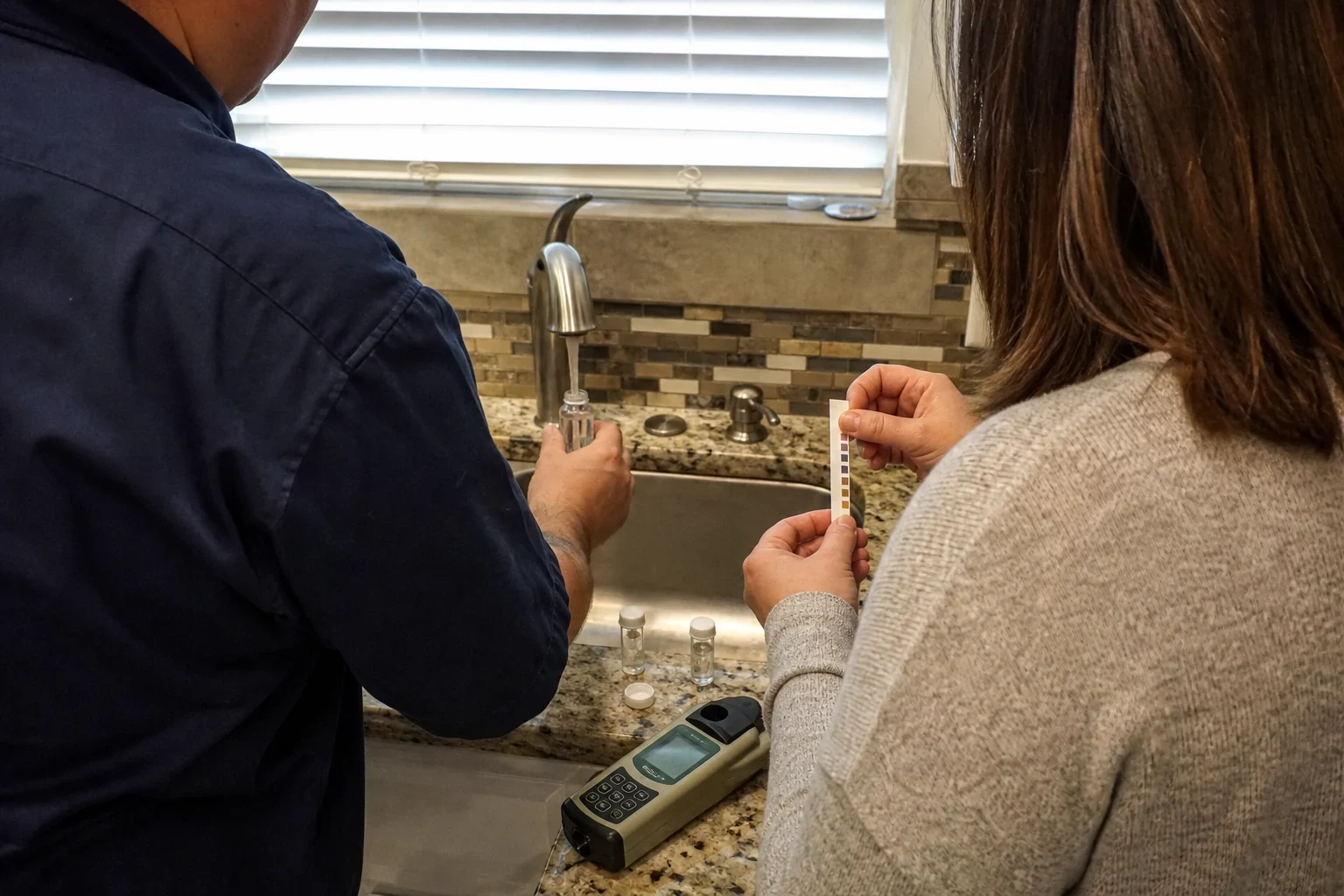
Test first, then decide
Most water in the Bedford area comes from a city system that is treated and monitored. That's a good starting point. But what reaches your glass can still change on the way through your home's own pipes, fittings and water heater.
A test gives us the numbers that matter for treatment: hardness, iron, chlorine, pH, total dissolved solids and, in older plumbing, lead and copper. We use those numbers to say whether a filter makes sense and which kind. If your water looks fine, we say so.
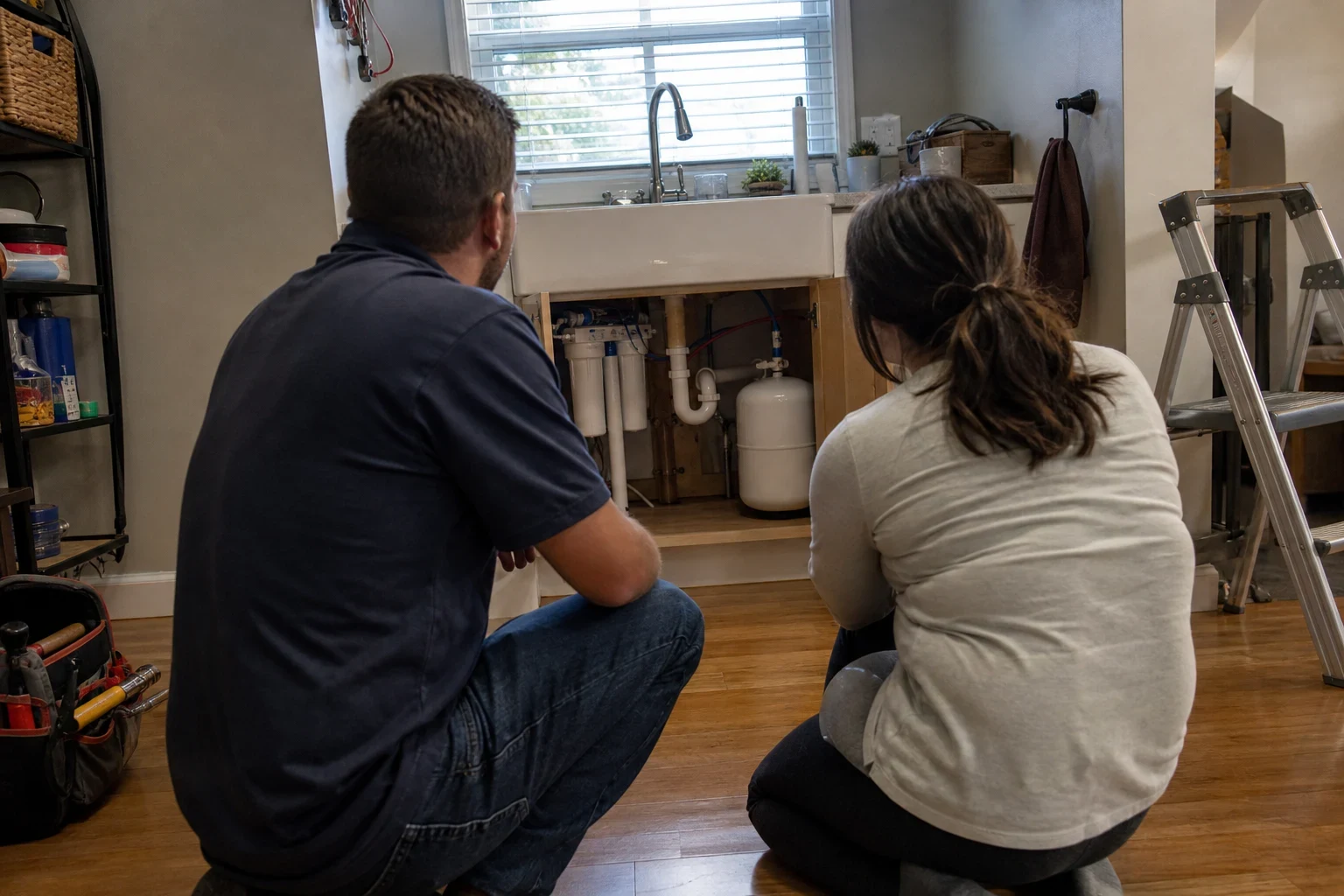
Testing matters on the install side too. Hardness and flow decide what size of equipment fits. The equipment decides what the plumbing code asks for, like a bypass valve, a proper drain with an air gap, and sometimes a city permit and inspection. We sort that out before anything gets bought.
What a water test covers
- Hardness and pH
- We measure hardness in grains per gallon and check pH. These two numbers tell us if scale is likely and whether a softener is even worth talking about.
- Chlorine and taste
- We check disinfectant levels at the kitchen tap. If your water tastes or smells like a pool, this shows whether carbon filtration would help.
- Iron, manganese and sediment
- Orange or brown stains, cloudy water and gritty faucet screens point here. We test for the metals and look at what's collecting in your fixtures.
- Lead and copper sampling
- For older plumbing, we take a first-draw sample after the water has sat in the pipes overnight. It goes to an outside lab. That sample shows what your own plumbing adds.
- A look at your plumbing
- We check the main shutoff, the water heater and the spots where equipment could go. That tells us about space, drain access and outlets before we recommend anything.
- Written results
- You get every number in writing with a plain note on what it means, including the ones that came back normal.
Signs it's time to test your water
Crust on faucets and glass
White buildup on fixtures and shower doors, or a water heater that pops and rumbles. A hardness test shows how much mineral is really there.
Stains in sinks and tubs
Rust-colored rings or laundry turning dingy suggest iron or sediment. Testing tells us whether it's coming from the supply or from your own pipes.
Chlorine taste or smell
If you buy bottled water because the tap tastes off, test before buying a system. The fix is often simple.
Older plumbing
Homes built before 1986 may have lead solder on copper joints, and a lot of houses around here date from that era. A lab test is the only way to know if any of it reaches your tap.
A test that came with a sales pitch
If someone ran a quick color-change test and then quoted a big system, get a second set of numbers. You deserve results that aren't tied to a sale.
New house or plumbing work
Moving in, repiping or swapping the water heater are good times to get a baseline you can compare against later.
What affects the cost of water testing
The price depends on which tests you need and whether samples go to a lab. A basic on-site panel costs less than a full lab workup. We give you the price by phone before we come out, so nothing changes on the day.
On-site readings or lab work
Hardness, pH, chlorine and dissolved solids can be read right at your sink. Lead, copper and a full metals panel need an outside lab, which adds cost.
Number of sample points
One kitchen tap is the usual. Testing before and after an existing filter, or at a second tap with a different supply line, adds samples.
Specific contaminants
If you want something particular checked, like an item you read about in the city's water report, it may need its own lab test.
Follow-up testing
If you already own equipment, a check to confirm it's still doing its job is a smaller visit than a first full panel.
How a water test visit goes
- 1
Short phone call
Tell us what you're noticing and how old the house is. We'll say which tests fit and how to prepare, like leaving the water unused overnight if we're taking a lead sample.
- 2
Samples at your home
We draw samples at the kitchen tap and usually one other point, run the on-site readings and look at where equipment would go. We don't need to shut off your water.
- 3
Lab results when needed
Lead, copper and some metals go to an outside lab. Those take longer than the on-site readings, and we call you when the report is back.
- 4
Plain answer and next steps
We go over each number with you. If treatment makes sense, we explain which equipment, what the install involves and whether the city wants a permit for it. If nothing is needed, that's the answer.
Water testing questions
Isn't city water already tested?
Yes. The city tests at the treatment plant and in the distribution system and publishes a yearly water quality report. Those results stop at the meter. They don't show what your own pipes, fittings and water heater add. Our test looks at the water at your tap.
Will you try to sell me a system?
We'll tell you what the numbers show. Plenty of homes need nothing, or just a small drinking-water filter at the kitchen sink. If a bigger system makes sense, you'll see the numbers behind it first.
Do I need a water softener?
Not unless the hardness test says so. We only suggest one when the hardness number and the scale you're seeing back it up. Our water softeners page explains how we size one if you do.
How long until I get results?
On-site readings are done during the visit and we go over them before we leave. Lab samples take longer. We call you as soon as that report comes back and walk you through it.
Does installing a filter need a permit in Bedford?
It depends on the equipment. An under-sink reverse osmosis unit is usually a simple job. Whole-house carbon filtration and softeners tie into the main line and need a drain, so plumbing code rules apply and the city may require a permit and inspection. We find out what your install needs and pull the permit before work starts.
Know what's in your water before you spend money
One visit gives you real numbers and a straight answer. Treatment, if you need any, comes after that.