ServicesWater softeners
Water Softeners in Bedford, After a Hardness Test
We only put in a water softener when a hardness test on your own tap says it will help. If it does, we size the unit to your home's water use, run the drain line to code and check whether the city needs a permit first.
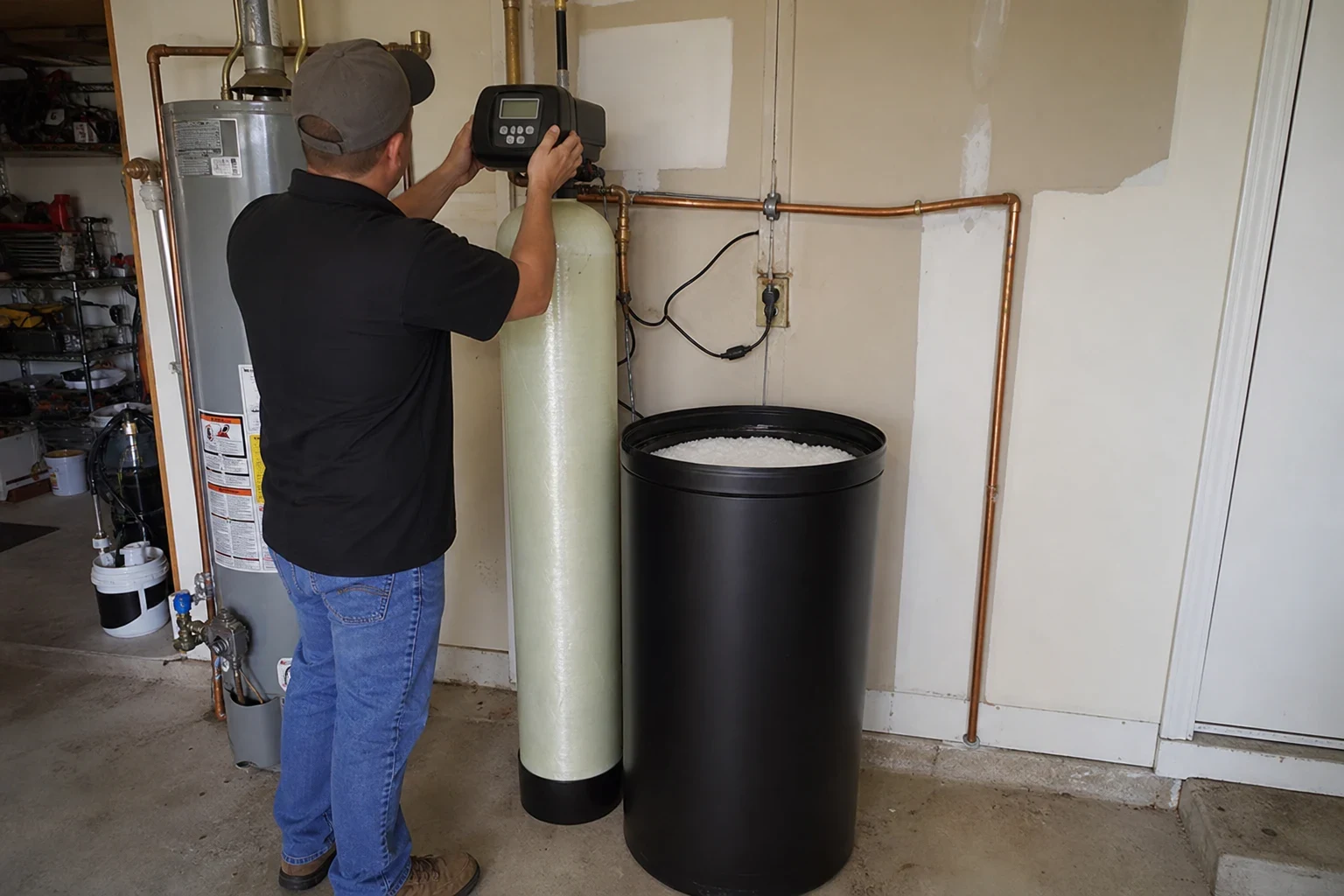
Test first, then decide
A softener swaps the calcium and magnesium in your water for a small amount of sodium. That stops the white crust on faucets and the scale that builds up inside water heaters. It does nothing for chlorine taste, and it is not a filter for most other things.
So we start with a hardness test. Some homes have water hard enough that a softener pays for itself in fewer spots, less soap and longer appliance life. Others are better served by something else, like whole-house carbon filtration. You get the number and a straight answer either way.
When a softener does make sense, the install has to meet plumbing code. That means a proper drain with an air gap, a bypass valve and connections the inspector will sign off on if the city asks for an inspection.
What a softener install includes
- Hardness test on your tap
- We measure hardness in grains per gallon right at your home. If we see signs of iron or something else, we tell you and suggest full water testing.
- Sizing to your household
- We size the unit from your hardness number and how many people live in your home. An oversized unit wastes money up front. An undersized one regenerates too often and burns through salt.
- Bypass valve and plumbing tie-in
- We add a bypass so you can shut the softener out of the line without turning off water to the house. Outdoor hose bibs can stay on hard water if you want to save salt.
- Code-correct drain line
- The regeneration water has to go to a proper drain with an air gap, so dirty water can never siphon back into your supply. This is the step we see done wrong most often on older installs.
- Salt setup and settings
- We fill the brine tank, set the hardness level and set regeneration for a low-use hour, usually overnight.
Signs your water may be hard enough to soften
White crust on fixtures
Chalky buildup around faucets and shower heads is mineral scale. It comes back fast after you clean it.
Spotty dishes and glass
Cloudy spots left after the dishwasher runs often point to hard water.
Soap that won't lather
Hard water fights soap. You use more shampoo and detergent and still feel a film.
A noisy water heater
Popping or rumbling in a tank heater can be scale settled on the bottom. That scale cuts efficiency and shortens the tank's life.
A test that came back hard
If a past test showed high hardness, that is the best sign of all. Bring the results and we will go over them with you.
How the job goes
- 1
Test and talk
We test hardness at your tap and look at where a softener would go. You hear the number and whether we think it is worth it.
- 2
Written estimate
If you want to go ahead, you get a written estimate listing the unit, the parts and the labor. No surprise add-ons later.
- 3
Permit check
We check with the city on whether this install needs a permit. If it does, we pull it before work starts and schedule any inspection.
- 4
Install day
Most installs take a few hours. We shut off the water, cut in the bypass and softener, run the drain with an air gap, then flush and check every joint for leaks.
- 5
Settings and walkthrough
We set the unit, show you how to add salt and use the bypass, and clean up before we leave.
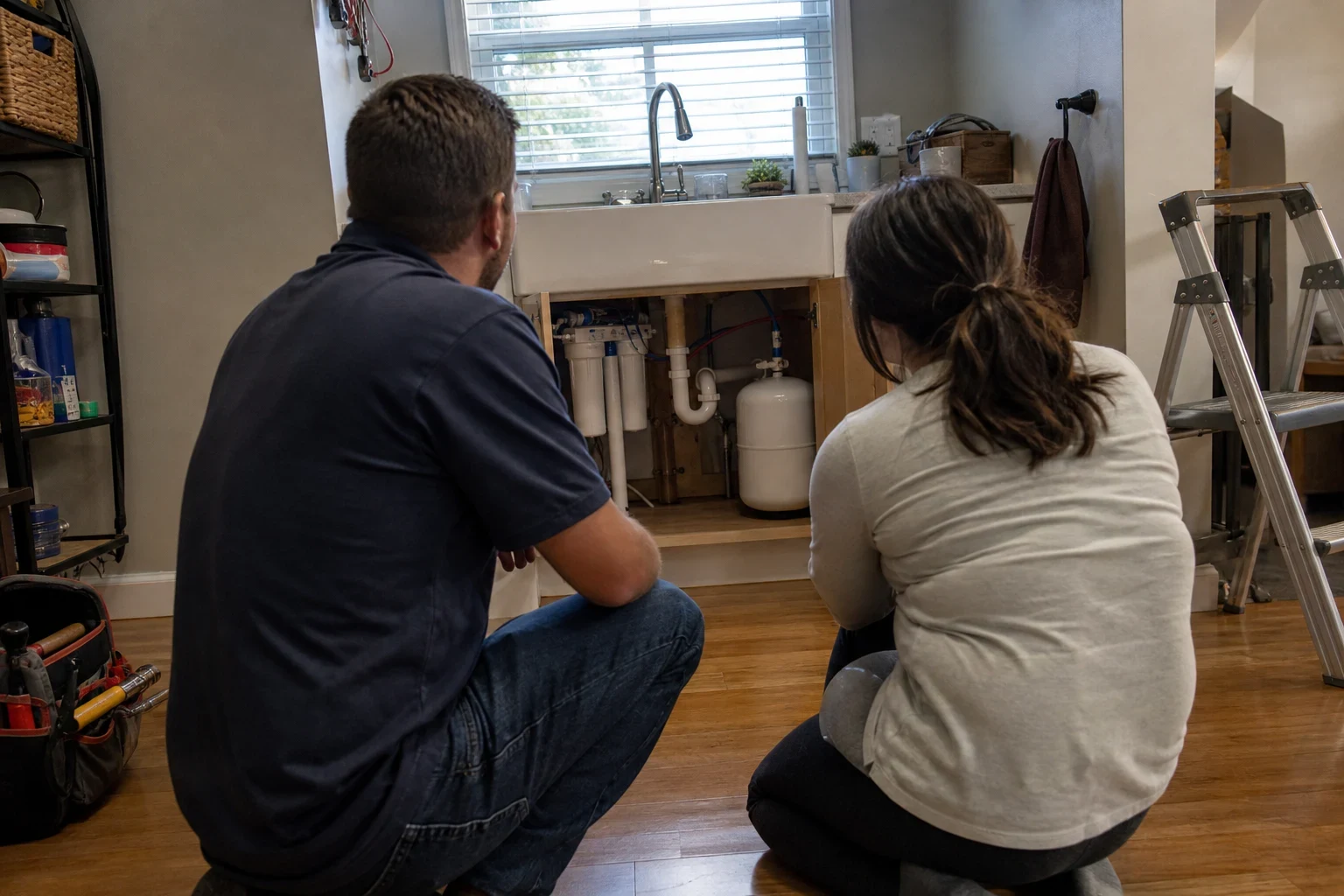
What moves the price
Every softener job is priced after we see your water and your plumbing. Two homes on the same street can land in different places. These are the things that make the difference.
- Unit capacity
- Harder water and bigger households need a larger unit. Your test result drives this more than anything.
- Location and access
- A garage with an open main line is simple. A tight closet or a line that has to be rerouted takes more time and material.
- Drain and power
- The unit needs a nearby drain and an outlet. If either one is missing, running them adds to the job.
- City fees and inspection
- If the city requires a permit, the fee and inspection visit are part of the cost. We list them on the estimate.
- Added filtration
- Some homes pair a softener with a carbon or sediment filter. That is a separate line item you can take or leave.
Water softener questions
Something not covered here? (817) 632-5451
Do I really need a water softener?
Maybe not. It depends on how hard your water is and what is bothering you. If the problem is taste or smell, a softener won't fix it. That is why we test before we recommend anything.
Does a softener install need a permit?
Some cities require one when you tie into the main water line, and rules can change. We check before each job. If one is needed, we pull it and handle the inspection.
Will soft water taste salty?
Usually not. A softener adds a small amount of sodium, and how much depends on how hard your water was to begin with. If you want low-sodium drinking water, an under-sink reverse osmosis unit at the kitchen sink takes care of that.
Can a softener remove iron or chlorine?
A softener can handle a small amount of dissolved iron. Heavier iron needs iron and sediment filtration. Chlorine needs carbon, so we would point you to whole-house carbon filtration for that.
How much upkeep is there?
Mostly adding salt when the tank runs low, often every month or two. Once a year it is worth checking the settings and cleaning the brine tank. Our filter replacement and maintenance visits cover that if you'd rather not do it yourself.
Find out if a softener is worth it
Tell us what you're seeing at the tap. We'll set up a hardness test and give you an honest answer before anything gets installed.