ServicesWhole-house carbon filtration
Whole-House Carbon Filtration in Bedford
If your tap water tastes or smells like a pool, a carbon system on the main line fixes it for every faucet and shower in your home. We size it to your water use, plumb it in with a bypass and proper drain, and handle the permit when the city requires one.
What a whole-house carbon system does
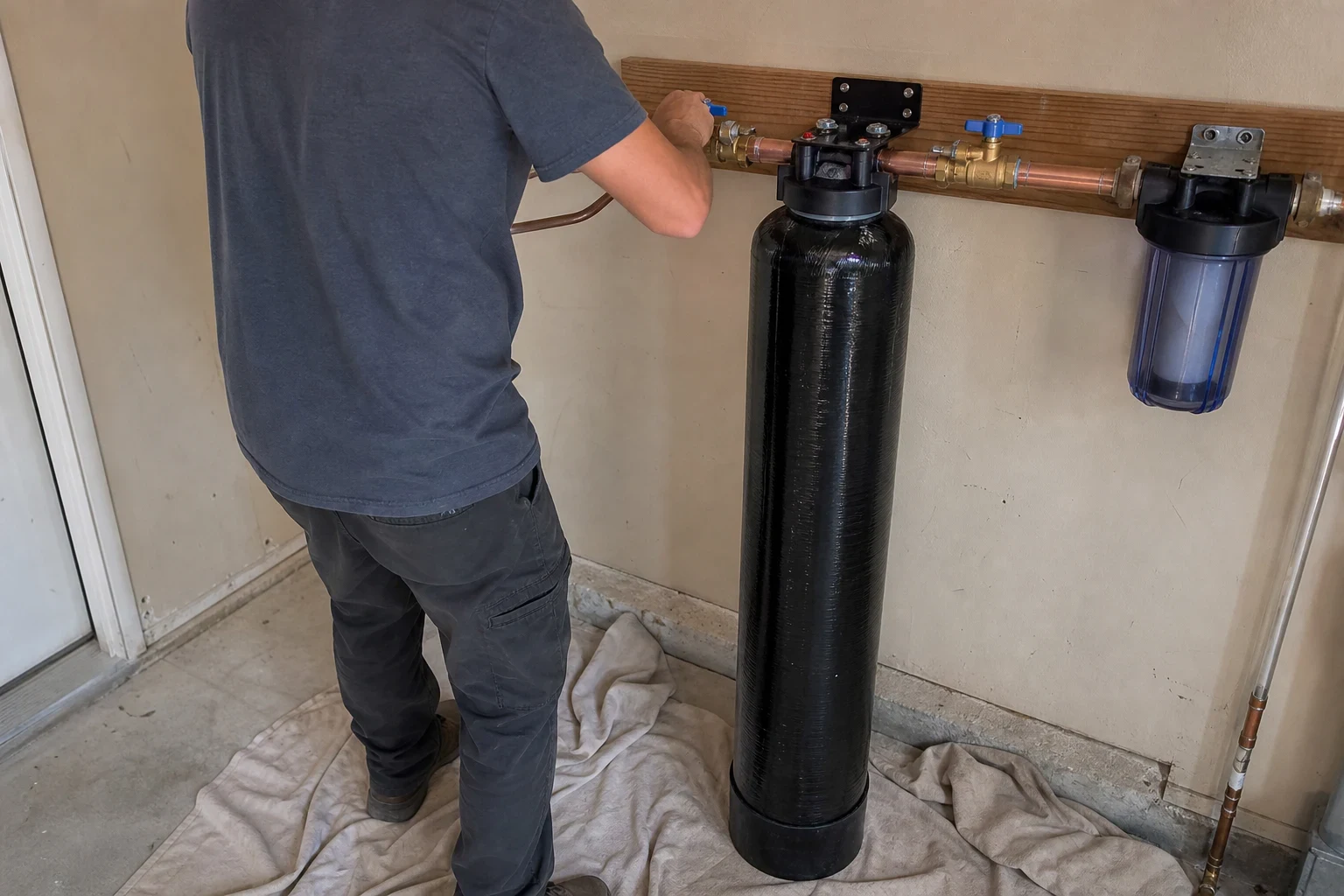
City water is disinfected before it reaches you. That keeps it safe, but it can leave a chlorine taste and smell, and some people notice dry skin or hair after a shower. A whole-house carbon filter sits where the water line enters your home and pulls that disinfectant out before the water splits off to your fixtures.
Carbon is good at a few things: chlorine, chloramine (with the right carbon), and many taste and odor compounds. It does not soften water, remove dissolved minerals or kill bacteria. If you want extra protection for drinking water, under-sink reverse osmosis is the better tool, and the two work well together.
Your city's annual water quality report says whether your water is treated with chlorine or chloramine. That matters, because chloramine needs catalytic carbon and more contact time. We check before we recommend a tank.
What the install includes
- Sizing to your home
- We count bathrooms and look at how many showers run at once. An undersized tank drops your pressure and wears out early.
- The right carbon for your water
- Standard carbon for chlorine. Catalytic carbon for chloramine. We tell you which one and why.
- Bypass and shutoff valves
- A three-valve bypass lets you keep water running if the system ever needs service. Shutoffs on both sides make filter changes quick.
- A drain line with an air gap
- Backwashing tanks need a drain. Code requires an air gap so drain water can never siphon back into your supply, and we build it that way every time.
- Bonding jumper on metal pipe
- If your home's copper line is part of the electrical ground, cutting in a filter can break that path. We install a jumper across the system to keep it continuous.
- City paperwork and cleanup
- When the city requires a permit for the work, we pull it and schedule the inspection. We leave the area clean and walk you through the valves before we go.
Signs a carbon system makes sense
Pool smell at the tap
A clear chlorine smell from the kitchen sink or shower is the most common reason people call us.
Drinking water tastes off
If you buy bottled water because the tap tastes like chemicals, carbon usually fixes the taste.
Dry skin or hair after showers
Some people feel the difference in the shower more than in a glass. A pitcher filter cannot help there; a whole-house system can.
Pitcher filters at every sink
If you are changing several small filters, one system at the main line may cost less over time and covers everything.
You are not sure what is in your water
Start with water testing. If chlorine is the only issue, carbon is the answer. If iron or sediment shows up, we may pair it with a prefilter.
What sets the cost
We quote each job once we've seen your plumbing. A straightforward garage install close to the main line runs less than one where pipe has to be rerouted. These are the things that change the number.
How big the tank is
Larger homes with more bathrooms need more carbon to hold pressure and give the water enough contact time.
Standard vs. catalytic carbon
Catalytic carbon, used for chloramine, is priced higher than standard carbon.
Location of your main line
A garage with easy access keeps things simple. Installing outdoors calls for a cover or enclosure to shield the system from the North Texas sun and the odd hard freeze.
Drain and piping
How far it is to a proper drain, plus any rerouting of old pipe, adds labor and materials.
City inspection
When the city calls for a permit, the fee and inspection visit show up as lines on your estimate.
How the job goes
- 1
Look and listen
We look at where your main line comes in, often in the garage or near an outside hose bib on slab homes. We ask what bothers you about the water and check pressure.
- 2
Written estimate
You get a line-item estimate: the system, the carbon type, valves, drain work and any city fee. No add-ons show up later.
- 3
Install day
We shut off the water, cut in the bypass and system, run the drain with its air gap and set the bonding jumper. Most installs take part of one day, and your water is off only for a few hours.
- 4
Flush and inspection
New carbon gets flushed until the water runs clear. If the city inspects the job, we meet the inspector and make sure it passes.
Whole-house carbon questions
Do I need a permit for a whole-house filter?
It depends on the city and the scope. Cutting into the main water line and adding a drain often needs city sign-off. We check with the city before the job and handle the paperwork when it is required, so you are not left with work that fails a later home inspection.
Will it lower my water pressure?
A properly sized system should not cause a drop you notice. Pressure problems come from undersized tanks or clogged filters. We size for your peak use, like two showers and a washer running together.
How often does the carbon need changing?
Backwashing tank systems last several years, depending on your water use and chlorine levels. Cartridge systems need changes more often. Our filter replacement and maintenance service keeps track of it for you.
Does carbon remove lead?
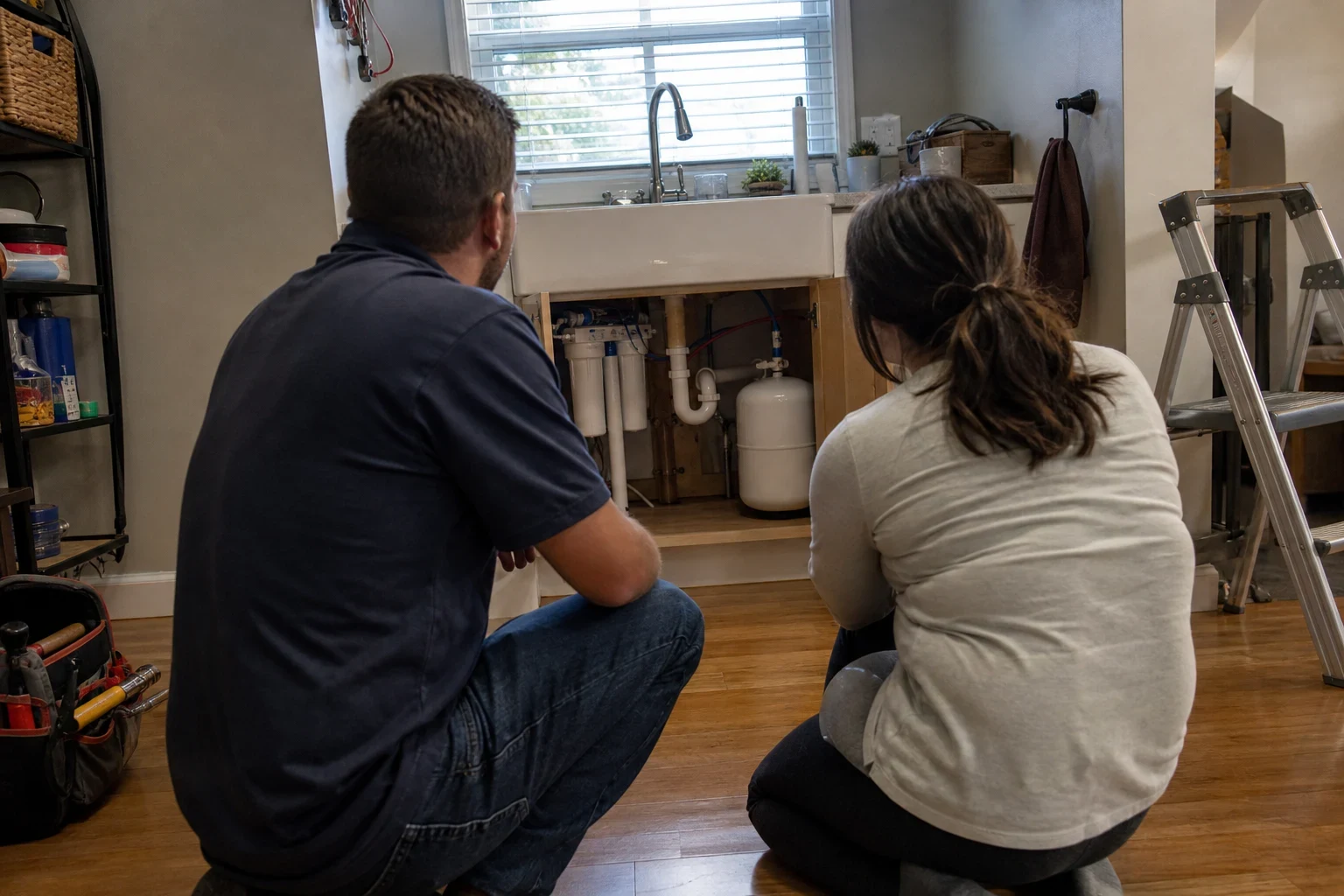
A whole-house carbon tank is not the right tool for lead. If you have older plumbing and are worried about lead, an under-sink reverse osmosis system at the kitchen sink is the better choice. We can test first so you know.
Do I still need a water softener?
Carbon does nothing for hardness. Whether you need a softener depends on your test results, not a sales pitch. We only recommend one after a hardness test shows it is worth it.
Ready to lose the chlorine taste
Tell us about your water and where your main line comes in. We will tell you what fits, what it involves and whether the city needs to sign off on it.